NEORSD Stormwater Fee: How a Cleveland Remodel Raises Your Bill (2026 Guide) | CLE Remodeling Co.
If you're planning an addition, a new patio, or a wider driveway in Greater Cleveland, there's a line item most homeowners never see coming: your Northeast Ohio Regional Sewer District (NEORSD) stormwater fee. Unlike a building permit, it doesn't show up on your contractor's estimate it shows up months later, on your utility bill, as a quarterly charge that can jump a full tier depending on how much hard surface your project adds. CLE Remodeling Co. has handled additions, patios, and driveway work across Cuyahoga County since 2005, and this is the piece of the budget conversation that gets skipped most often. Here's what the fee actually charges you for, what it costs in 2026, and how to plan a remodel that doesn't push your bill higher than it has to.
What the NEORSD Stormwater Fee Actually Charges You For
The stormwater fee is separate from your sewer and water charges. It funds NEORSD's regional program to manage runoff that would otherwise flood streets, erode streambanks, and overload the combined sewer system during heavy rain. According to NEORSD's Regional Stormwater Management Program page, the fee is calculated entirely from the amount of impervious surface on your property rooftops, driveways, patios, and any other surface that sheds rainwater instead of absorbing it. The more hard surface you have, the more runoff your property sends into the regional system, and the higher your fee.
NEORSD measures every property's impervious surface using satellite imagery, and the unit of measurement is the Equivalent Residential Unit (ERU) defined as 3,000 square feet of impervious surface. Most residential customers fall into a single tier based on how their property's impervious footprint compares to that baseline. You can look up your own property's current measurement and fee through NEORSD's online Fee Finder tool, linked from the same program page.
The reason this matters for a remodel specifically: the fee isn't a one-time construction cost, it's a permanent addition to your monthly utility bill for as long as you own the home. A tier change from a driveway expansion or an addition doesn't show up on the contractor's invoice it shows up on your NEORSD bill three to four months later, once the district's next imagery cycle picks up the change. Homeowners who don't budget for it aren't surprised by a one-time expense; they're surprised by a recurring one that never goes away on its own.
2026 Cleveland Stormwater Fee Rates by Tier
NEORSD groups residential properties into three tiers based on impervious surface area. Per the district's adopted 2022–2026 rate schedule, the 2026 monthly stormwater charges are:
Tier 1 (0.6 ERU)
Smaller impervious footprint. $3.80 per month in 2026.
Tier 2 / Base (1.0 ERU)
The tier most Greater Cleveland residential customers fall into. $6.35 per month in 2026.
Tier 3 (1.8 ERU)
Larger homes and lots with more impervious coverage. $11.39 per month in 2026.
Worth knowing before you budget a multi-year project: NEORSD confirms 2026 is the final year of its current five-year rate schedule, with a new rate study already underway for 2027–2031. If your remodel is going to push you into a higher tier, that change will land on top of whatever the next rate-setting cycle brings one more reason to know where your project stands before you break ground rather than after.
Which Remodeling Projects Move You Into a Higher Tier
Not every remodel affects your stormwater fee. Interior work — a kitchen remodel or a finished basement — doesn't change your roofline or your lot coverage, so it doesn't touch your tier. What does move the needle is anything that adds new hard surface at ground level or expands your roof footprint:
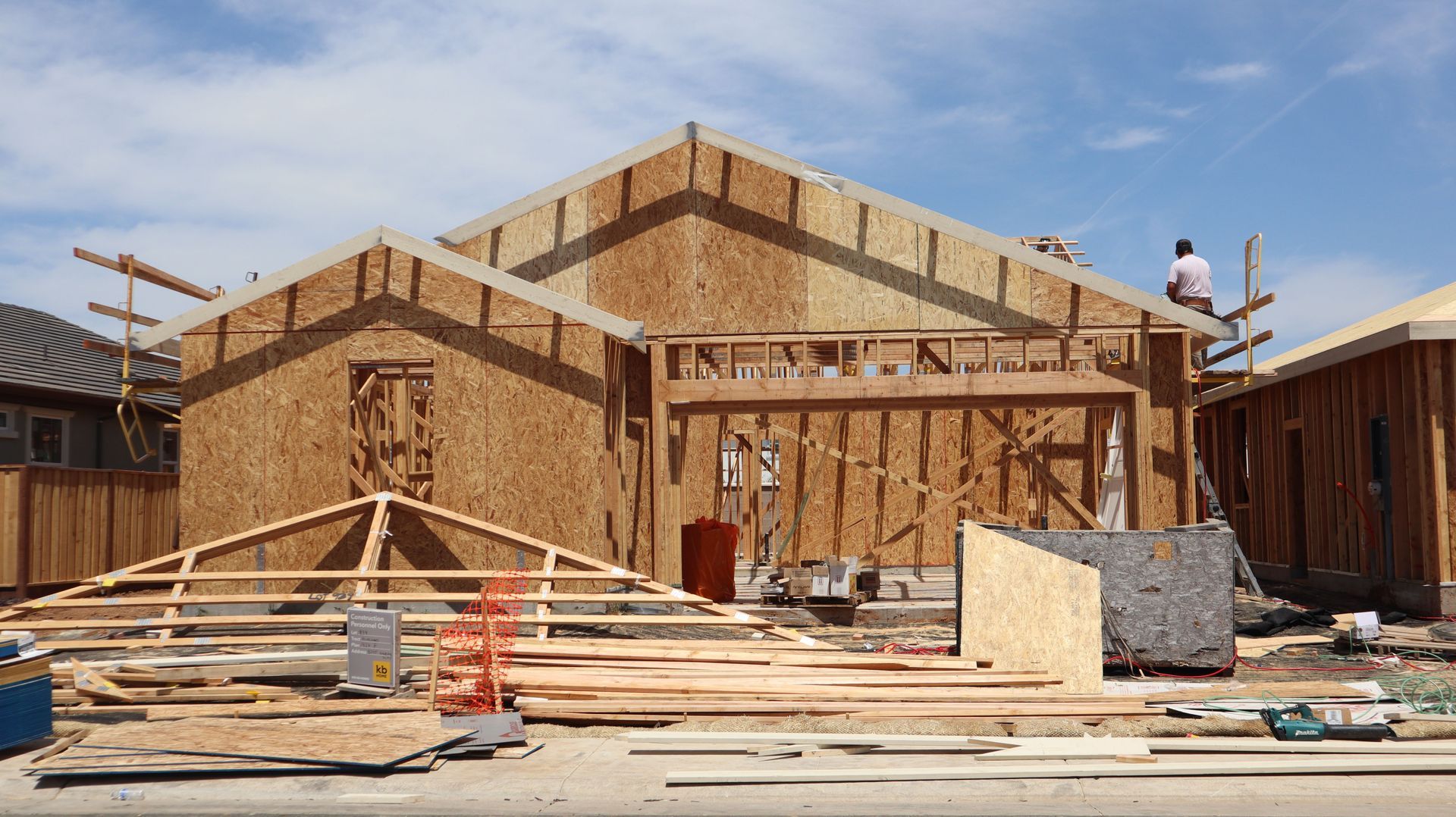
Home additions. Any home addition that expands your home's footprint adds roof area — the single biggest driver of a tier change. A family room bump-out or a second-story addition (which doesn't add ground-floor footprint, so it typically doesn't affect your fee at all) affect your impervious total very differently. Before finalizing plans, it's worth checking your current Fee Finder measurement and running the math on the added square footage against NEORSD's tier thresholds — details on typical addition sizes and costs are in our Cleveland home addition cost guide.
New or expanded patios and driveways. A poured concrete patio, an expanded driveway, or a new parking pad all count as impervious surface the moment they're installed, regardless of whether they required a building permit. Combined with a deck — which is typically not counted as impervious if it's built with gapped boards over open ground — the material and design choice can matter as much as the square footage.
Detached structures. A detached garage, shed, or accessory structure adds roof area just like a house addition does, and it's easy to overlook when estimating a project's total impervious impact.
If your addition is large enough to raise zoning or setback questions, our guides on home addition zoning and setback rules and when a zoning variance is required are worth reading alongside this one — the same site plan that determines your setback compliance is what NEORSD uses to remeasure your impervious surface.
How to Lower Your Stormwater Bill With a Fee Credit
The fee isn't fixed once your impervious surface is set. NEORSD's Stormwater Fee Credit Policy Manual lays out several credit programs that residential customers can apply for if they manage stormwater on-site, and they can be stacked with a remodel rather than treated as a separate project later.
Individual Residential Property Credit
A flat 25% credit for homeowners who install a basic stormwater control measure — most commonly a rain garden sized to capture runoff from at least 25% of the roof or an equivalent impervious area.
Quality and Quantity Credits
Beyond the flat credit, NEORSD offers a Quality Credit (up to 25%) and a Quantity Credit (up to 75%) for measures that treat runoff quality or physically reduce peak flow leaving the property — detention, retention, and similar site engineering. These can be combined for a larger total reduction than the flat credit alone.
Impervious Surface Reduction Credit
Per NEORSD's Individual Residential Property Credit application guidance, removing 500 square feet or more of existing impervious surface and replacing it with a vegetated or pervious surface — permeable pavers, pervious concrete, or grid pavers, for example — qualifies for a credit application on its own.
The practical takeaway: if a driveway or patio replacement is already part of your project scope, specifying permeable pavers instead of standard concrete or asphalt can offset some or all of the fee increase from the rest of the job — and it's a design decision that has to be made before the pour, not after.
Planning a Cleveland Remodel That Keeps Your Fee in Check
The fee is a monthly, permanent line item, so it deserves a five-minute conversation before your project starts, not a surprise on next quarter's bill. A few things worth doing at the planning stage of any whole-house renovation or addition:
Check your property's current tier on NEORSD's Fee Finder before you finalize a design, so you know your starting point. Ask your contractor for the added square footage of roof, patio, or driveway your specific plan creates — that's the number that determines whether you cross a tier threshold. If a driveway or patio is being replaced anyway, price out permeable paving alongside standard materials; the fee credit can meaningfully offset the cost difference over time. And if your project adds enough impervious surface to justify it, apply for the appropriate NEORSD credit once construction is complete rather than assuming the district will apply it automatically — these are homeowner-initiated applications.
A useful way to frame it during design: every square foot of new roof, driveway, or patio has two costs — the construction cost your contractor quotes, and the monthly stormwater cost that follows it for the life of the home. Neither number should decide the project on its own, but knowing both before you commit to a footprint means there are no surprises waiting in next year's utility bills.
None of this should change what you build. It changes how you budget for it. If you're weighing a home addition, a new patio, or a full renovation and want the stormwater math worked into your project plan from day one, reach out to CLE Remodeling Co. for a free estimate — we'll walk the site with you and flag anything that affects your fee before you sign a contract, not after.
Frequently Asked Questions
Does a kitchen or bathroom remodel affect my NEORSD stormwater fee?
No. The stormwater fee is based only on impervious surface, roofline footprint, driveways, and patios. Interior remodeling that doesn't change your home's footprint or add hard surface at ground level has no effect on your tier.
How do I find out what tier my property is currently in?
Use NEORSD's online Fee Finder tool, available through the Regional Stormwater Management Program page on neorsd.org. It shows your property's current measured impervious surface and corresponding tier.
Will my stormwater fee change automatically after I add a patio or addition?
NEORSD periodically remeasures impervious surface using satellite imagery, so changes are typically caught during that cycle. If you want your new construction reflected sooner or if you're applying for a credit you can contact NEORSD's Customer Relations team directly to request a review.
Is a wood deck counted the same as a concrete patio?
Generally no. A standard deck built with gapped boards over open ground allows water to pass through and typically isn't counted as impervious surface the way a poured concrete or asphalt patio is. Deck materials and construction details can vary, so it's worth confirming with NEORSD for your specific design.