Deck Installation Cost in Cleveland, Ohio: 2026 Guide
A new deck is one of the few home improvement projects that pays you back in square feet of usable living space and in resale value at the same time. But in 2026, Greater Cleveland homeowners are running into a wider price range than they expect material costs, tariff pressure on composite decking, and Ohio permit requirements all move the number. Before you call a contractor, it helps to know what actually drives the cost of a deck up or down.
This guide breaks down real 2026 pricing by size and material, what labor typically adds, and what the City of Cleveland requires before you can legally build. CLE Remodeling Co. has handled additions, whole-house renovations, and outdoor living projects across Greater Cleveland, and this is the same information we walk homeowners through on every deck consultation. (Finishing a basement instead? See our basement finishing cost guide for the indoor equivalent of this breakdown.)
How Much Does a Deck Cost to Build in 2026?
Nationally, a typical deck costs between $9,000 and $20,000, with the national average landing around $14,000, according to NerdWallet's 2026 deck cost analysis. Home project platform Angi puts the national average slightly lower, at $8,246, with a typical range of $4,341 to $12,586 — the gap between the two figures mostly comes down to deck size and material grade.
For a professionally built deck, Angi's data (via NerdWallet) points to an all-in installed cost of $30 to $60 per square foot once materials and labor are combined. That range is wide because a small pressure-treated platform deck and a large multi-level composite deck with built-in seating are, functionally, two different projects wearing the same name.
Deck Cost by Size
Square footage is the single biggest driver of total price. Using Angi's per-square-foot installed range, here's roughly what Cleveland-area homeowners can expect before adding site-specific factors like grading or a raised foundation:
- 12x12 deck (144 sq. ft.): approximately $5,760–$8,640 installed
- 14x20 deck (280 sq. ft.): approximately $11,200–$16,800 installed
- 20x20 deck (400 sq. ft.): approximately $16,000–$24,000 installed
These figures assume a standard single-level deck. Multi-level designs, built-in benches or planters, stairs, and railing upgrades all add to the total beyond the base square-footage math.
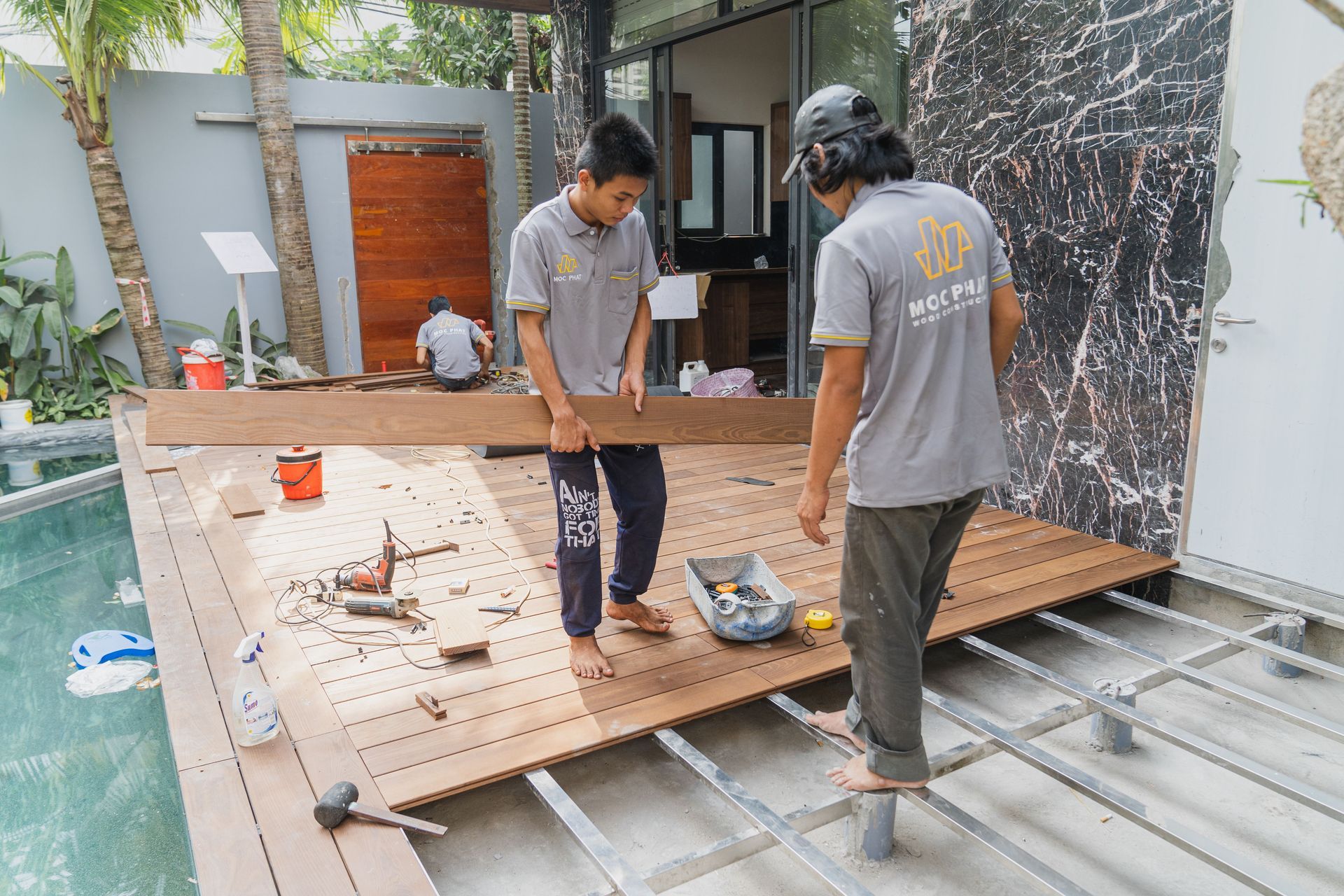
Deck Material Options and What They Cost
Material choice affects both the upfront bill and how much maintenance the deck needs afterward. Based on 2026 material-only pricing per square foot from Decks.com's cost calculator and NerdWallet:
- Pressure-treated wood: $3–$8 per sq. ft. The most affordable option and widely available, but it needs sealing or restaining roughly every two to three years to hold up.
- Cedar: $4–$8 per sq. ft. Naturally resistant to rot and insects, lightweight, but still needs periodic maintenance to keep its color.
- Composite decking (e.g., Trex-style): $5–$20 per sq. ft. Low-maintenance and resistant to fading and mold, with a higher upfront cost than wood.
- Vinyl or PVC: $5–$13 per sq. ft. Won't stain, rot, or attract insects since it's fully synthetic.
- Redwood: $7–$12 per sq. ft. Naturally insect- and decay-resistant, though pricier and still needs occasional upkeep.
- Exotic hardwoods (e.g., Ipe): $10–$20 per sq. ft. Long lifespan and superior durability, but expensive and dense enough that it's harder to install.
- Aluminum: $15–$20 per sq. ft. Extremely durable and low-maintenance, but a higher price point and a different look than natural wood.
Worth noting for 2026 planning specifically: composite decking has seen real upward price pressure this year from material tariffs, so if you're comparing quotes across contractors, confirm whether the pricing reflects current material costs or an older estimate.
What Labor Adds to Your Deck Project
Materials are only part of the bill. According to Angi's data cited by NerdWallet, professional labor for deck construction typically runs $15–$35 per square foot, while Decks.com's independent estimate puts labor closer to $8–$22 per square foot. Either way, labor is often close to half of your total project cost, and a few factors push it toward the higher end:
- Multi-level designs, built-in stairs, or custom railing details that take more time to frame
- Site access — a backyard that's hard to reach with equipment or materials adds labor hours
- Peak season demand, typically spring and summer in Northeast Ohio, when contractor schedules are tightest
- Permit and inspection coordination, which a licensed contractor typically handles as part of the project
If your budget is tight, scheduling the project for the off-season (late fall or winter planning for a spring build) can sometimes soften labor pricing, since contractor demand is lower.
Do You Need a Permit to Build a Deck in Cleveland?
Yes. The City of Cleveland's Division of Construction Permitting lists decks specifically among the structures that require drawings and a permit before construction, alongside garages, sheds, swimming pools, and fences. Permits exist to confirm the work meets the Ohio Building Code and local safety standards, and they also protect you as the homeowner: if an inspection finds work that doesn't meet code and the contractor doesn't fix it, the permit process gives you a path to recover costs through the contractor's bond.
In practice, that means before your deck goes up you'll need an approved Project application submitted through the city's Permit Portal, along with construction drawings. For 1-, 2-, and 3-family homes, those drawings are recommended to carry a licensed design professional's seal but aren't always required to be sealed, design calculations can sometimes substitute. If your property sits in a Cleveland Heights historic district or another suburb with its own building department, check with that municipality directly, since permit requirements and fee schedules are set locally and vary city to city across Greater Cleveland. For a broader walkthrough of what does and doesn't require a permit on a Cleveland remodel, see our full permit guide.
Is a Deck Addition a Good Investment?
Beyond day-to-day enjoyment, a deck is one of the more reliable projects for recouping its cost at resale. According to Zonda's 2025 Cost vs. Value Report, a midrange wood deck addition costing $18,263 on average returns $17,323 at resale a 94.9% cost recoupment, placing it 8th out of the report's top 10 highest-ROI remodeling projects nationally. A composite deck addition, at an average cost of $25,096, returns $22,199, or 88.5% recouped. Both figures put deck additions well ahead of most interior remodeling projects, which the same report found tend to deliver lower resale returns because their appeal is more subjective to individual buyers.
That national trend lines up with what Zonda's researchers flagged as a broader 2025 pattern: exterior projects, including decks, sided the list of highest-return remodels, outperforming large discretionary interior renovations. If resale value factors into your decision at all, a deck addition is one of the safer places to put renovation dollars.
Choosing the Right Material for Northeast Ohio's Climate
Cleveland's freeze-thaw winters and humid summers are harder on outdoor structures than a mild climate would be. In our experience working on Greater Cleveland properties, pressure-treated lumber and composite decking both hold up well here as long as the substructure is built with proper drainage and ledger flashing to keep water from sitting against the house. Homeowners who want the lowest-maintenance option long-term tend to lean composite or PVC, since neither one needs the seasonal sealing that wood requires to survive repeated freezing and thawing. That said, it's a budget versus upkeep tradeoff, not a right or wrong answer a well-maintained cedar or pressure-treated deck can last for decades too.
Why Work With a Licensed Cleveland Remodeling Contractor
Adding a deck is, structurally, closer to a home addition than a weekend project: it involves footings, ledger attachment to your home's structure, and a permit review most homeowners have never navigated before. If you're weighing a deck against a larger project like a whole-house renovation, the same permitting and budgeting logic applies at a bigger scale. A licensed, local contractor already knows what Cleveland's permitting office expects on a drawing set, which materials perform in this climate, and how to sequence a deck build around Northeast Ohio's weather windows. You can see examples of our completed projects or read what Greater Cleveland homeowners have said about working with our team before you decide who builds yours.
Frequently Asked Questions
Does a small deck still need a permit in Cleveland?
In most cases, yes. The city's permitting rules list decks broadly among structures requiring drawings and a permit, regardless of size, though the drawing requirements can differ based on scope. Confirm your specific project's requirements with the city's Permit Portal before you build.
What's the most budget-friendly decking material?
Pressure-treated wood is typically the least expensive option at $3–$8 per square foot for materials, though it requires more ongoing maintenance than composite or vinyl alternatives.
How long does a typical deck project take from start to finish?
Timeline depends heavily on permit review time and project complexity, but simple single-level decks generally move faster than multi-level designs with custom features like built-in seating or wraparound stairs.
Can I finance a deck project?
Homeowners commonly use a home equity loan or HELOC for deck projects, since the added outdoor living space can contribute to home value. Some contractors also offer their own financing options, it's worth comparing rates and terms before committing to one.
Get a Real Number for Your Cleveland Deck Project
National averages and per-square-foot ranges are a useful starting point, but the only way to know what your specific deck will cost is a site visit and a written estimate. If you're planning a deck addition anywhere in Greater Cleveland in 2026, contact our team for a free estimate and we'll walk the site, talk through material options, and handle the permit process from there.