Tile Flooring Installation Cost in Cleveland, Ohio: 2026 Guide
If you're pricing out new tile floors for your Cleveland home, the range you'll see online can feel enormous quotes anywhere from a few hundred dollars to well over five figures for a similarly sized room. That's not bad math on anyone's part. Tile is one of the most cost-variable flooring materials on the market because the price swings hard based on tile type, subfloor condition, and which room you're tiling.
Nationally, homeowners pay an average of $2,111 for a professional tile installation project, according to HomeAdvisor's 2026 cost data, with most jobs landing between $400 and $7,000 depending on square footage and material grade. Homewyse's May 2026 pricing data puts the national installed rate at $16.38 to $20.21 per square foot. Here's what actually drives that range, what to expect room by room, and how our family-owned Cleveland remodeling team prices tile work so there are no surprises on invoice day.
1. Tile Flooring Installation Cost in Cleveland, Ohio: The 2026 Numbers
Per HomeAdvisor's national data, the all-in cost of professional tile installation materials and labor together runs $5 to $45 per square foot , with most homeowners landing well inside that band rather than at either extreme. Broken into its parts:
- Labor: $3 to $15 per square foot, which works out to roughly $60 to $120 per hour for a professional tile installer.
- Materials: $2 to $35 per square foot depending on tile type (more on that below).
- Old tile removal: an additional $2 to $7 per square foot if you're tiling over an existing floor that needs to come out first.
If your project is part of a larger whole-house renovation supervised by a general contractor, budget for that oversight too: Homewyse notes contractors typically add 13% to 22% to the raw materials-and-labor total for planning, scheduling, and quality control across a multi-trade job.
2. What You'll Pay by Room: Kitchens, Bathrooms, Basements, and Showers
Room-specific costs vary because moisture exposure, fixture obstacles, and finish expectations differ by space. HomeAdvisor's room-level averages:
- Kitchen floors: $800 – $3,000
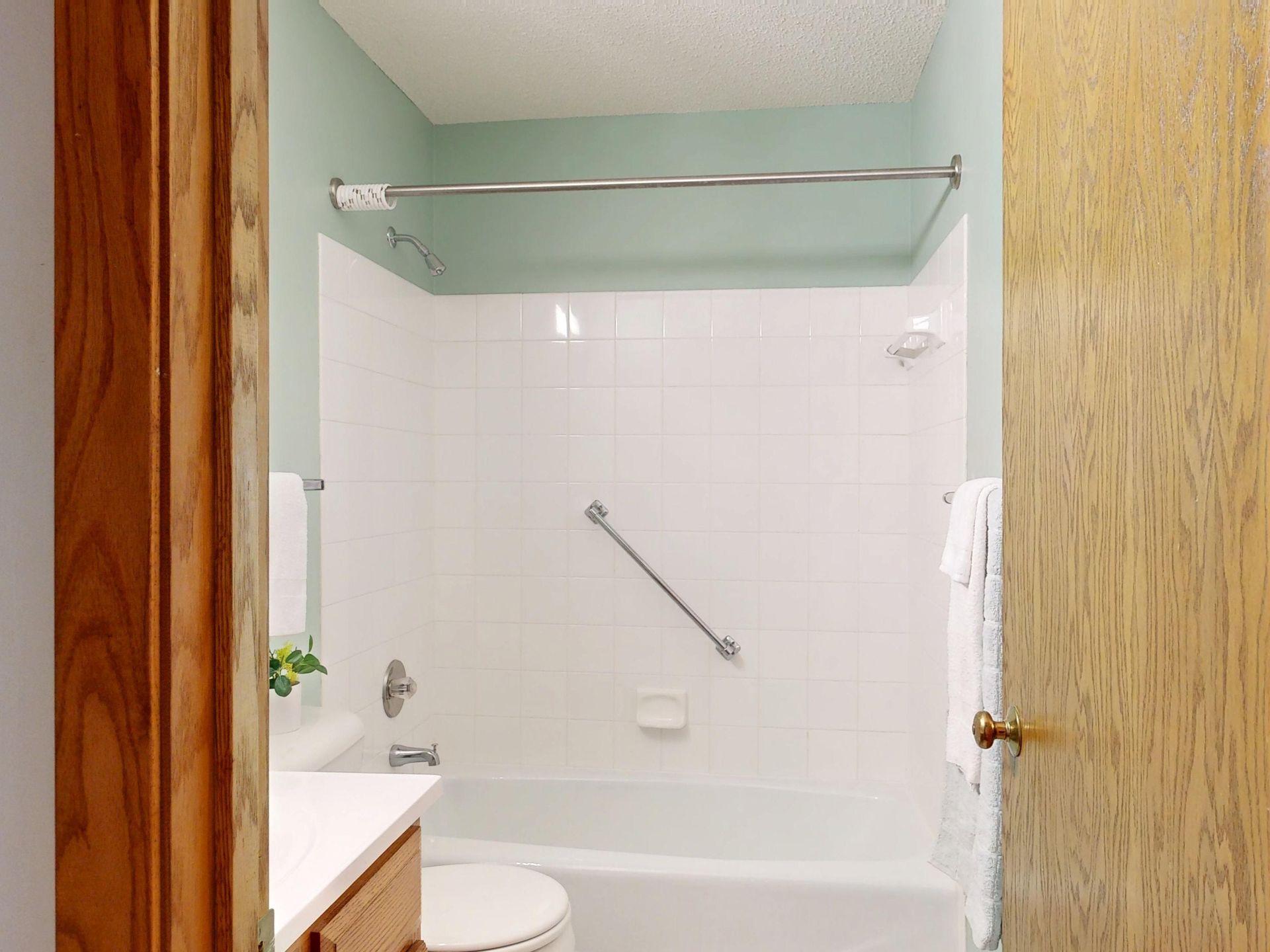
- Bathroom floors: $300 – $1,300
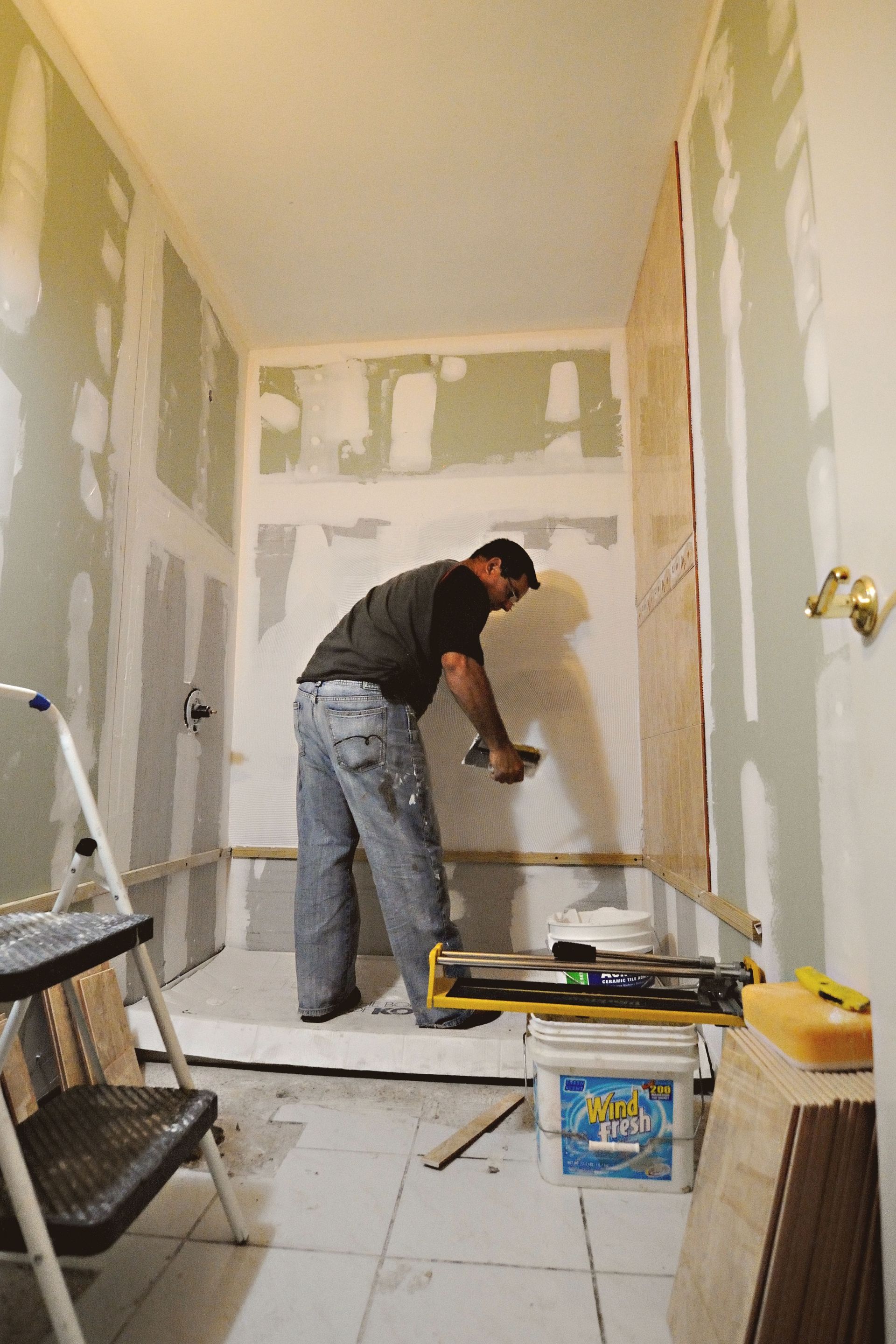
- Shower tile: $1,800 – $5,000
- Backsplash: $480 – $1,500
Kitchens and bathrooms tend to run higher per square foot than open living areas because they require moisture-resistant materials, vapor barriers, and more precise cutting around cabinets, islands, and fixtures. If tile is one piece of a bigger project, our guides on kitchen remodeling and bathroom remodeling walk through the full scope, and our small kitchen remodel ideas and small bathroom remodel ideas posts are worth a look if you're working with a tighter Cleveland-area floor plan.
Basements are a different case: below-grade moisture makes tile one of the more forgiving flooring choices, since it won't warp or trap water the way carpet or solid hardwood can. If you're planning a full basement remodel, tile flooring is worth budgeting alongside your waterproofing plan, not as an afterthought once the space is framed.
3. Porcelain vs. Ceramic: Which Tile Fits a Cleveland Home
Material cost per square foot, per HomeAdvisor:
- Glazed ceramic: $4 – $15
- Unglazed ceramic: $4 – $35
- Porcelain: $2 – $15
- Wood-look porcelain: $3 – $12
The real difference isn't just price it's absorbency. Tile is rated on a scale from non-vitreous (up to 7% water absorption, best for dry indoor spaces) to impervious (under 0.5% absorption, frost-resistant and safe for exterior or heavy-moisture use). Porcelain is generally denser and less absorbent than ceramic, which is why it's the more common recommendation for entryways, kitchens, and bathrooms in a climate like Northeast Ohio's, where freeze-thaw cycles and seasonal humidity swings punish anything porous.
If you're still deciding between tile and another flooring material entirely, we've compared the tradeoffs in luxury vinyl plank vs. hardwood flooring, and if your existing hardwood just needs new life instead of replacement, see our hardwood floor refinishing cost guide.
4. Labor, Prep Work, and the Line Items Homeowners Forget
The subfloor is where tile projects go over budget. Per HomeAdvisor, a proper installation starts with a flat, crack-free surface — low spots get leveled, weak areas reinforced, and fiber-cement backer board or quality plywood screwed down before a single tile is set. Skipping this step invites cracked grout and, eventually, water damage that costs far more to fix than the prep work would have. If your Cleveland home has an older or uneven subfloor, expect that line item to add real time and cost to the quote.
This matters more in Cleveland's older housing stock than it does in new construction. Many of the pre-war and post-war homes across Cleveland, Lakewood, and Cleveland Heights were built with wood subfloors that have since settled, squeaked, or been patched over multiple times by previous owners. What looks like a simple flooring swap can turn into leveling compound, sistered joists, or a full backer-board replacement once the old flooring comes up which is exactly why a firm quote usually waits until after a contractor has actually seen the subfloor, not just the square footage.
A few other costs that catch homeowners off guard:
- Overage: order 10% to 15% extra tile beyond your exact square footage to cover cutting waste and future repairs discontinued tiles and dye-lot color variation make replacement tricky later.
- Cure time: thinset mortar needs 24 to 48 hours to cure before grouting can begin. Rushing this step can shift tiles out of place and weaken the bond.
- Minimum labor charges: replacing just one or two cracked tiles often costs more per tile than a full-room job, since installers charge a minimum fee regardless of job size.
5. Do You Need a Permit for Tile Flooring in Cleveland?
Straightforward flooring replacement is usually a cosmetic update, not a permit trigger. But scope changes fast the moment tile work is part of a larger kitchen or bathroom remodel that touches plumbing, moves fixtures, or alters the subfloor structure and permit requirements vary by Cuyahoga County municipality. Rather than guess at your specific project, our full permit guide for Cleveland homeowners breaks down what typically requires a sign-off and what doesn't.
6. How to Budget for Tile Without Cutting Corners
A few ways HomeAdvisor's data suggests you can trim cost without sacrificing quality:
- Shop the tile yourself. Clearance and overstock boxes at local suppliers can meaningfully cut the material line item.
- Handle demo yourself, if you're able. Removing old tile and hauling debris is labor-intensive but not skilled work doing it yourself can offset some of that $2–$7 per square foot removal cost.
- Don't DIY the setting and grouting unless you're confident in the result. A flawed subfloor or bad grout line is far more expensive to redo than to get right the first time, and a professional install protects the finish for the life of the floor.
If tile is one line item inside a bigger project, our kitchen remodel cost guide and bathroom remodel cost guide lay out the full project-level numbers, and if new countertops are part of the plan too, see our comparison of quartz vs. granite countertops.
One more factor worth weighing before you sign a quote: get more than one bid, and make sure each one specifies the same scope. A quote that excludes demo, backer board, or debris haul-away will always look cheaper on paper than one that includes it — the gap shows up later as a change order, not as savings. Ask every bidder the same three questions: does this include removing the old flooring, does it include new backer board or leveling compound if the subfloor needs it, and what's the minimum charge if the job comes in smaller than expected. Those three answers will tell you more about the real cost than the per-square-foot number on the estimate.
Frequently Asked Questions
Porcelain or ceramic for a Cleveland floor?
Porcelain is denser and less absorbent, making it the stronger choice for high-traffic areas, kitchens, entryways, and anywhere exposed to Northeast Ohio's freeze-thaw swings. Ceramic is lighter, easier to cut, and often more budget-friendly for walls or lower-traffic rooms.
How long before I can grout after setting tile?
Give the thinset mortar 24 to 48 hours to cure before grouting. Keep foot traffic off the area during that window.
Does tile flooring installation need a permit in Cleveland?
Standalone flooring replacement usually doesn't. If the tile work is part of a remodel that touches plumbing or structure, it may see the permit section above for the full breakdown by municipality.
How much should I budget above the tile price itself?
Plan for old tile removal (2–7/sq. ft. if applicable), 10–15% extra material for overage, and a 13–22% contractor markup if your tile work is supervised as part of a larger, GC-managed renovation.
CLE Remodeling Co. has been serving Greater Cleveland — including Shaker Heights, Rocky River, Bay Village, Cleveland Heights, Highland Heights, Avon Lake, and North Olmsted — for over 20 years. Todd and Laura Wallace built the business as a husband-and-wife team on straight talk and honest pricing, and that's still how every tile, kitchen, or bathroom estimate gets built today. Ready to get real numbers for your space? Call (216) 505-0352 for a free estimate.