Radon Testing in Cleveland, Ohio: What Homeowners Need to Know | CLE Remodeling Co.
If you're finishing a basement, waterproofing a crawl space, or repairing a foundation anywhere in Greater Cleveland, radon deserves a spot on your checklist. It's an invisible, radioactive gas that seeps up through the ground, and Cuyahoga County sits in one of Ohio's higher-risk zones for it. The good news: it's cheap to test for and straightforward to fix, especially when you're already opening up a basement or crawl space for other work.
Here's what radon actually is, what the real health data says, where Cuyahoga County falls on Ohio's radon map, and what to know about Ohio's contractor licensing rule before you hire anyone to test or fix it.
What Radon Is, and Why It's Worth Taking Seriously
Radon is a naturally occurring radioactive gas released as uranium breaks down in soil and rock. It's colorless and odorless, and it enters homes through cracks in foundations, sump pits, and gaps around pipes, most often collecting in basements and lower levels before working its way through the rest of the house.
According to the U.S. Environmental Protection Agency, radon is the second-leading cause of lung cancer in the United States after smoking, responsible for an estimated 21,000 lung cancer deaths every year, including roughly 2,900 among people who have never smoked. The EPA's guidance is direct: homes testing at or above 4 picocuries per liter (pCi/L) should be fixed, and the former U.S. Surgeon General has echoed that same threshold in a national health advisory urging homeowners to test and remediate.
None of that means panic. It means test, know your number, and act if you're above it.
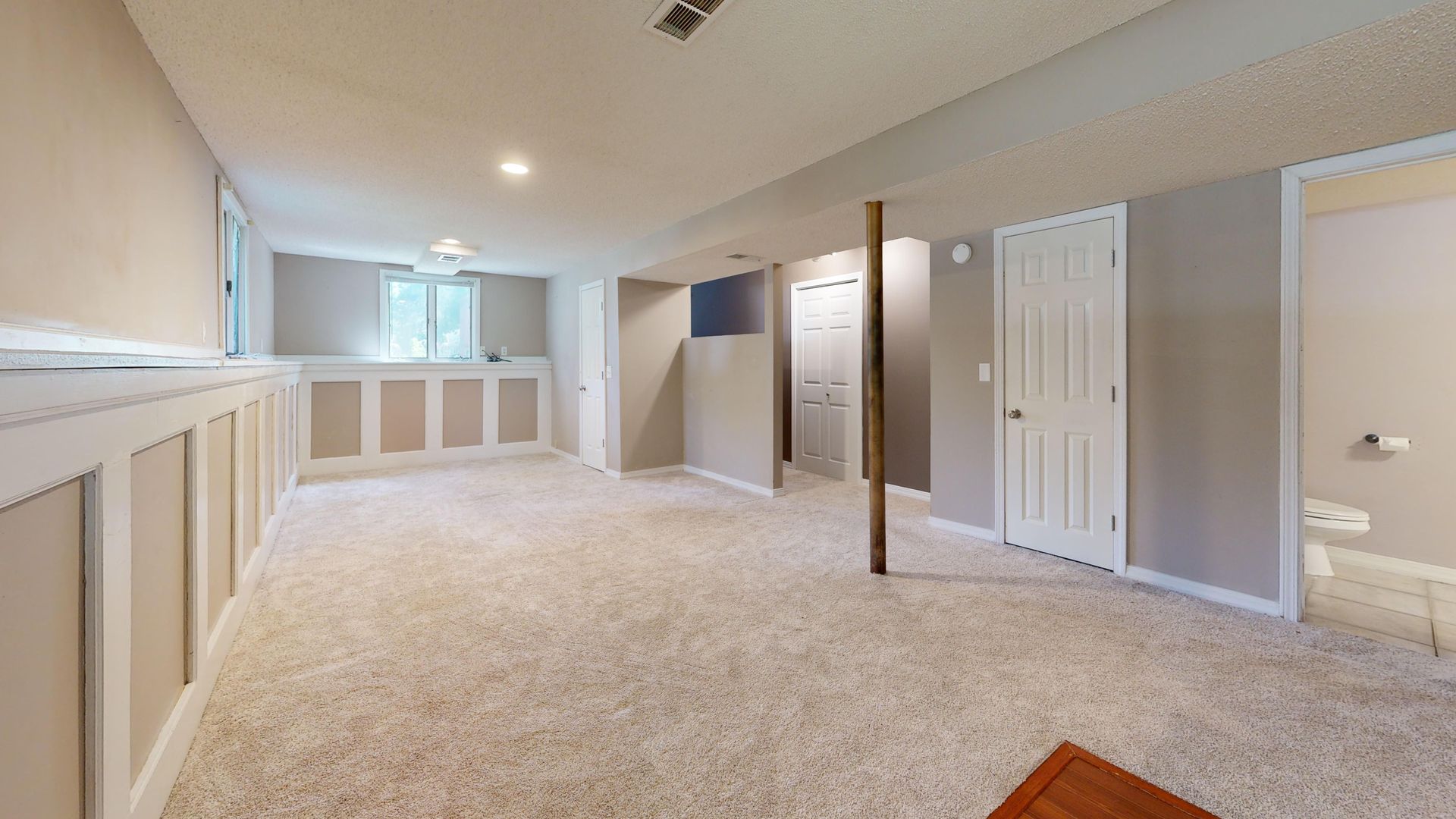
Where Cuyahoga County Falls on Ohio's Radon Map
The EPA maps radon potential by county, sorting them into three zones based on predicted average indoor screening levels. Zone 1 counties predict the highest average levels; Zone 2 counties are moderate. Cuyahoga County is mapped as a Zone 2 county, and real indoor test data backs that up: compiled EPA-sourced indoor testing data by zip code shows Cuyahoga County averages typically running in the 0.7 to 3 pCi/L range across most Cleveland zip codes, with several areas in our service footprint running higher, including North Olmsted (zip 44070), where the average measured concentration is 4.46 pCi/L, above the EPA's action level.
A county-level zone is a planning tool, not a diagnosis for your specific house. Two homes on the same Cleveland street can test differently depending on foundation type, soil conditions directly under the slab, and how the house was built. A Zone 2 rating means test your home; it doesn't mean assume the worst or assume you're fine either way.
How Radon Testing Actually Works
Testing is inexpensive and doesn't require any construction. According to the Centers for Disease Control and Prevention, there are two main approaches:
- Short-term test kits stay in your lowest livable level for a few days up to 90 days and give you a fast baseline reading. They're the most common starting point and are widely available through hardware stores or an Ohio-licensed radon measurement professional.
- Long-term test kits stay in place for more than 90 days and average out seasonal swings, since radon levels can shift with weather, soil moisture, and how much a house is sealed up in winter versus summer.
The CDC and EPA both point to the lowest livable level of the home as the right place to test, since that's where radon concentrates first. Because any work that opens up a foundation, crawl space, or basement can change how air moves through the house, that same lowest level is exactly what gets touched during a basement remodel, crawl space encapsulation, or foundation repair, making it a natural moment to test (or retest) before the space is closed back up.
If you're planning a remodel, the practical order of operations is: test first, then plan the scope of work around the result. A clean test means you can finish your basement without adding mitigation to the budget. A test at or above 4 pCi/L means the mitigation piping gets designed into the project from the start, which is far less disruptive than a "we finished the basement, now we have to open a wall" situation six months later.
What a Radon Mitigation System Involves
If a test comes back at or above 4 pCi/L, the standard fix is a sub-slab depressurization system: a PVC pipe network installed beneath the slab or crawl space vapor barrier, run up through the house and out above the roofline, with a quiet in-line fan that continuously draws radon gas from under the home and vents it outside before it can enter living space. According to the EPA, properly installed systems like this can reduce indoor radon levels by up to 99%.
In Ohio, this work isn't unregulated. The Ohio Department of Health's Radon Education and Licensing Program licenses the companies and individuals who test for and install radon mitigation systems in the state, and ODH publishes a lookup tool homeowners can use to confirm a contractor holds an active license before signing a contract. Asking to see that license, and checking it against the state's list, is a fair and reasonable question to ask any contractor who shows up offering radon work.
What Actually Drives the Cost of a Mitigation System
Every home is different, and we'd rather walk a Cleveland homeowner through an honest, house-specific number than publish a generic range that doesn't hold up once someone's on-site. What we can tell you is what drives the price up or down:
- Foundation type. A poured concrete basement slab, a block foundation, and a crawl space each call for a different sealing and piping approach, which changes labor time.
- Number of suction points. Larger footprints or homes with multiple foundation sections (an addition built at a different time, for example) sometimes need more than one suction point to depressurize evenly.
- Where the pipe run needs to go. Routing PVC pipe up through a finished two-story home costs more in labor than routing it through an open, unfinished basement, which is the whole reason timing this alongside a remodel saves money.
- Whether it's combined with other work. Pairing mitigation with a basement waterproofing or crawl space encapsulation project shares mobilization, sealing, and vapor barrier costs instead of paying for two separate site visits.
Why a Basement or Foundation Project Is the Right Time to Deal With It
Radon mitigation is far simpler and less expensive to design in while a basement, crawl space, or foundation is already open than to retrofit later into a finished space. We've walked a lot of Greater Cleveland homeowners through exactly this timing question during other basement-related work:
- During a basement remodel, mitigation piping can be routed through wall cavities or mechanical closets before drywall goes up, instead of being surface-mounted later.
- Basement waterproofing and radon mitigation share the same entry points, foundation cracks, and the sump pit, so it's efficient to test and plan for both at once. If you've read our guide to basement waterproofing costs in Cleveland, radon testing is the natural next line item to add to that scope.
- A crawl space encapsulation project already involves sealing the space and installing a vapor barrier, both of which are part of a proper mitigation setup, so combining the two avoids paying for access twice.
- If you're already addressing foundation repair, new cracks and penetrations are the exact pathways radon uses to get in, making it worth testing before you close everything back up.
It's the same logic we point homeowners toward before a basement mold remediation project: address air quality issues while the space is already open, not after the drywall and flooring are back in.
What to Ask a Cleveland-Area Contractor Before You Hire
Because radon work in Ohio is licensed, a few direct questions protect you as a homeowner:
- Are you (or the technician doing the work) currently licensed by the Ohio Department of Health for radon testing and/or mitigation?
- Can I see your license number, and can I verify it independently through the state?
- Will you provide a post-mitigation test to confirm the system actually brought levels below 4 pCi/L?
- If this is part of a larger basement or foundation project, how will the mitigation piping be routed so it doesn't get boxed in or forgotten before finishing work starts?
A contractor who can answer all four without hesitation is doing this the right way.
Frequently Asked Questions
Is radon a big problem in Cleveland, Ohio specifically?
Cuyahoga County is mapped by the EPA as a Zone 2 (moderate potential) county. Most Cleveland-area zip codes show average measured indoor levels below the 4 pCi/L action level, but some, like North Olmsted, average above it. That range is common enough locally that testing is a reasonable step for any older home, especially one with a basement.
How much does a radon test cost?
A basic short-term test kit typically costs far less than most other home safety checks, and many hardware stores and Ohio-licensed radon measurement professionals offer them. It's one of the most affordable steps a homeowner can take before starting basement or foundation work.
Does homeowners insurance or a home sale require radon testing in Ohio?
No. Ohio has no law requiring a seller to test for or mitigate radon before selling a home. However, under Ohio Revised Code Section 5302.30, a seller who already knows their home has elevated radon must disclose it on the state's Residential Property Disclosure Form.
Can I install a mitigation system myself?
It's not recommended. Proper sub-slab depressurization depends on correctly diagnosing your home's specific soil and foundation conditions, which is exactly why Ohio requires mitigation contractors to be licensed through the state's Radon Education and Licensing Program.
Will finishing my basement make a radon problem worse?
Not on its own, but sealing a basement more tightly (better insulation, new flooring, drywall over foundation walls) can reduce natural air exchange, which is one more reason to test before you finish the space rather than after. If mitigation is needed, it's simplest to install while the framing is still open.
Planning a Basement or Foundation Project in Greater Cleveland?
Todd and Laura Wallace have run CLE Remodeling Co. as a family-owned business for over 20 years, completing more than 1,000 projects across Shaker Heights, Rocky River, Bay Village, Lakewood, Cleveland Heights, Solon, Avon, Avon Lake, and the rest of Greater Cleveland. If you're planning a whole-house renovation, a basement finish, or any project that opens up your foundation, it's worth building a radon test into the plan from day one. Reach out for a free consultation, and we'll help you think through the right sequencing for your specific home. We've walked homeowners through this exact planning conversation during kitchen and bathroom remodels too, since any project that touches your home's mechanical systems is worth a quick radon check while the work is already underway.